Have you been seeing low carb meals all over your social media feeds lately? If you are curious about how changing your plates could help you reach your goals, you are definitely not alone. Many people look into the keto diet when they want a fresh approach to managing their weight.
Starting something new can feel overwhelming with all the conflicting advice online. You might wonder what you can actually eat or how your body handles the change. Let us break down how this eating style works in plain English so you can decide if it fits your lifestyle.
Note: Before we begin, please remember that everyone is different. If you have any underlying health conditions, take regular medications, are pregnant, or have a history of eating disorders, please talk to your doctor or a qualified healthcare professional before making major changes to your diet.
What Is the Keto Diet?
At its core, the ketogenic diet is a high fat, moderate protein, and very low carbohydrate eating plan. Normally, your body burns glucose, which comes from carbs like bread, fruit, and pasta, for its primary energy source.
When you drastically lower your carb intake, your body runs out of its usual fuel supply. It needs to find another energy source. That is where fat comes into the picture.
How Keto May Support Weight Management
When you limit carbs, your liver converts stored fat into molecules called ketones. Your body then uses these ketones for energy. This metabolic state is known as ketosis.
Many people use keto for weight management because high fat and moderate protein foods tend to keep you feeling full for longer. When you feel satisfied, you might naturally snack less or eat smaller portions. However, your total calorie intake still matters. Even on keto, eating more calories than your body burns means you may not see weight loss.
What Can You Eat on Keto?
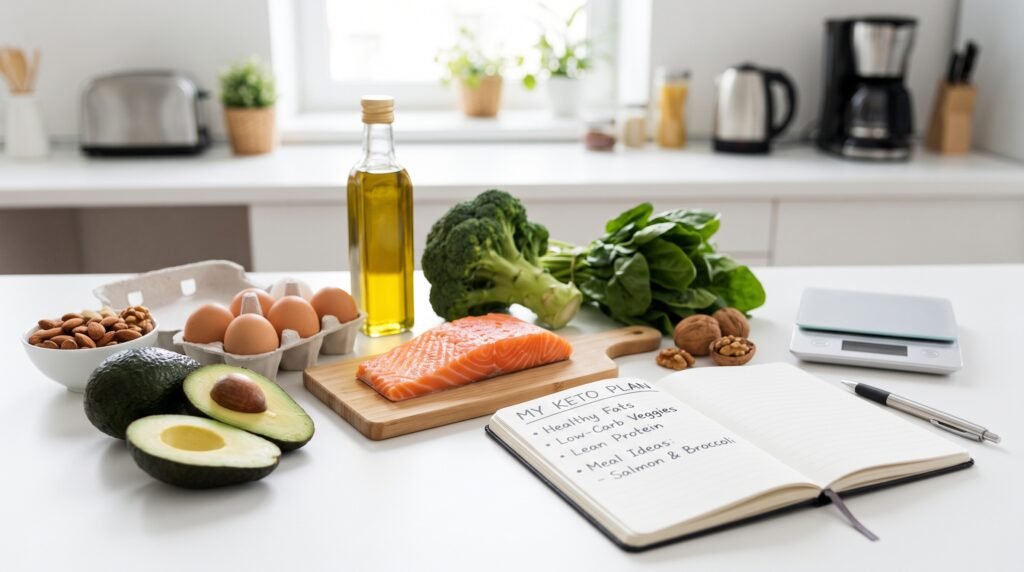
One reason people enjoy low carb eating is that they still get to eat rich, flavorful foods. Your grocery cart will look a bit different because you will be swapping out grains and sugars for healthy fats and fiber-rich greens.
Here are the foods you will see most often on a keto menu:
- Healthy fats like olive oil, avocado oil, and butter
- Proteins like beef, chicken, fish, eggs, and pork
- Above-ground vegetables like spinach, kale, broccoli, and cauliflower
- Full-fat dairy like cheese, heavy cream, and plain Greek yogurt
- Nuts and seeds in moderate amounts
On the other hand, you will want to limit foods high in carbohydrates. This includes bread, pasta, rice, potatoes, sugary drinks, sweets, and most high sugar fruits.
A Simple Keto Day of Eating
Planning your meals ahead of time makes sticking to a new routine much easier. You do not need fancy ingredients to make healthy keto meals. Simple whole foods work best.
Here is a quick look at what a day of eating might look like:
- Breakfast: Scrambled eggs cooked in butter with a side of sliced avocado and spinach.
- Lunch: A big green salad topped with grilled chicken, olive oil, and a handful of pumpkin seeds. If you want a quick weeknight dinner idea later, you might also love making a batch of 30-Minute Sheet Pan Creamy Garlic Chicken and Broccoli.
- Dinner: Baked salmon served with roasted broccoli tossed in garlic and olive oil.
- Snack: A small handful of almonds or a cheese stick if you feel hungry between meals.
Common Keto Mistakes to Avoid
Beginners often run into a few common hurdles when starting out. Knowing what to watch out for can save you a lot of frustration.
First, make sure you are eating enough vegetables. Cutting carbs does not mean cutting out fiber. Your digestion still needs leafy greens and non-starchy veggies to stay healthy.
Second, do not forget about hydration. When you reduce carbs, your body flushes out extra water. Drinking plenty of water and keeping your electrolyte intake balanced is essential.
Finally, watch your overall portion sizes. Foods like nuts, cheese, and oils are very calorie-dense. Eating them in large amounts can stall your progress.
Keto Tips for Beginners
Starting slow often brings the best results. You do not have to throw out your entire pantry overnight. Try reducing your sugar and starchy carbs gradually over a week or two.
Focus on getting enough protein to support your muscles, and make sure you are getting quality sleep and daily physical activity. Weight management is not just about food. Rest and movement play a huge part in how you feel.
If you ever want to check out more simple meal ideas or wellness tips, visit Get Smart Health Picks for more resources.
Is Keto Right for Everyone?
No single diet works for every single person. Some people thrive on a high fat, low carb lifestyle, while others feel better eating more complex carbohydrates like whole grains and fruit. Listen to your body and choose a path that supports your long-term health and happiness.
Frequently Asked Questions
How fast will I lose weight on keto?
Weight loss varies widely from person to person. Factors like your starting weight, activity level, sleep, and genetics all play a role. Sustainable changes take time, so focus on healthy habits rather than a specific timeline.
Do I need to count calories on keto?
While keto helps many people feel full naturally, calorie intake still matters for weight management. If you are not seeing results, tracking your portions for a few days can help you see where adjustments are needed.
Can I eat fruit on the keto diet?
Most fruits are high in natural sugars and carbs. However, small portions of berries, such as strawberries, blueberries, or raspberries, can often fit into a daily low carb meal plan.
What is the keto flu?
Some beginners experience temporary fatigue, headaches, or brain fog during the first week as their body adapts to burning fat. Staying well hydrated and getting enough salt and electrolytes can help ease these symptoms.
Can I build muscle on a keto diet?
Yes, you can build or maintain muscle as long as you eat enough protein and engage in regular strength training. Protein is a key part of any healthy weight management plan.
Conclusion
The keto diet can be a helpful tool for some people looking to manage their weight and simplify their eating habits. However, it is not the only way to reach your goals. The most successful eating plan is the one you can stick with for the long run.
Focus on building balanced, sustainable habits that make you feel energized. Listen to your body, stay hydrated, and remember to consult a healthcare professional before making any drastic changes to your routine.